Back to Projects
Mobile UX / Behavior Change
Contribution
User research & competitive analysis
Synthesized insights - gap - opportunities
Designed IA & user flow
Designed app
Time
2 months
Platform
Mobile Application

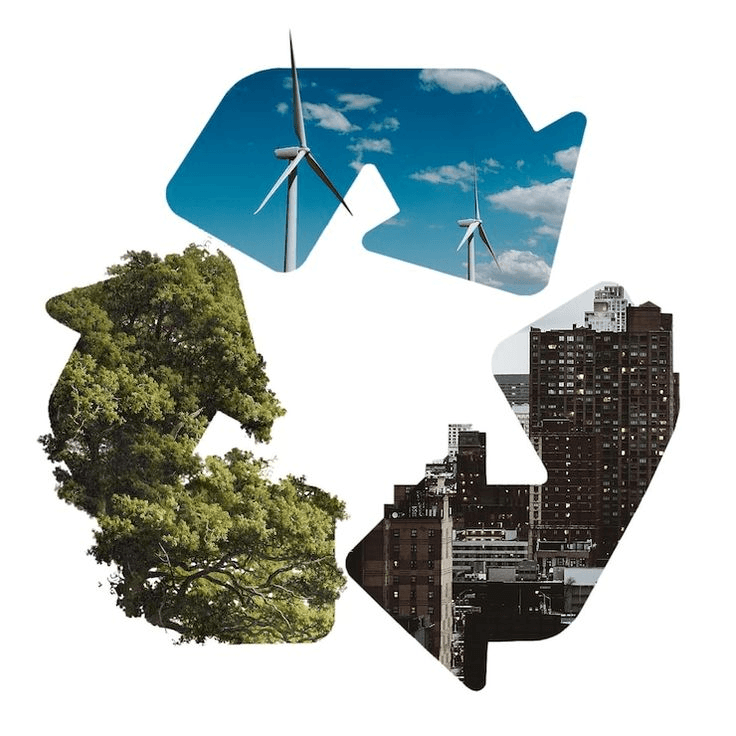
Watching 10 hour of online video can produe about 4.4kg CO₂e - roughly like driving 11 miles.
With more time spent on phones and online platforms, the environmental impact of digital behavior is becoming more relevant in discussions around sustainability.
*Sources: Carbon Trust (Carbon impact of video streaming; includes per-hour estimate used here) and U.S. EPA (typical passenger vehicle CO₂ per mile).
The Problem
Everyday digital use can contribute to carbon emissions, but this impact is often hard to notice, easy to lose awareness, and difficult to act on without positive reinforcement.
Invisible Footprint
The environmental impact of digital behavior is difficult to perceive during normal device use
Low Daily Awareness
Users may care about sustainability, but often do not connect it to routine digital habits
Habitual Behavior
Because these actions feel automatic and consequence-free, they are easily repeated without reflection

Target Audience
Young urban users who are highly engaged with digital platforms, have basic sustainability awareness, and are more open to small, behavior-based lifestyle changes.

Demographics
• Ages 22-35
• Urban residents
• High daily smartphone use
• Comfortable with app-based tools and digital services
Behaviors
• Spend significant time on phones, streaming, and social media
• Rely on digital tools for work and study
• Already practice some low-effort sustainable habits
• Want to do more for climate
Motivations
• Care about climate impact
• Want actionable steps
• Prefer low-effort solutions
• Value transparency
• Respond to social proof
Research & Competitive Analysis
To better understand the problem space, I combined user research and competitive analysis to examine both user behavior and existing solutions.
User Research
5
Interviews
10
Surveys

I conducted user interviews and surveys to understand
What makes behavior change difficult
How users think about digital sustainability
What kinds of support feels motivating and realistic in daily life
Insights
Users are more likely to act when sustainable choices feel simple and easy to maintain.
Users stay more motivated when their actions are met with visible progress or positive feedback.
Even when users care about sustainability, digital carbon is often not a strong priority in everyday decision-making.
Competitive Analysis
Existing Carbon Trackers
Apps like Commons, Klima
✓ Good at education
✓ Raising awareness
✓ Provide general sustanability information
✗ Lack of feedback
✗ High manual input required
✗ More focuses on broader lifestyle not everyday digital habits
Habit Apps
Apps like Streaks, Habitica
✓ Excellent behavior reinforcement
✗ Not context-aware
✗ Generic, not eco-focused
The Gap
There is still a gap for an app that not only calculates digital carbon footprint, but also helps users build more sustainable digital habits over time.
To better understand the problem space, I combined user research and competitive analysis to examine both user behavior and existing solutions.

Make digital footprint impact more visible
Create clearer ways for users to notice the environmental impact of their digital behavior in everyday use.

Reduce effort in sustainable action
Design lower-impact choices that feel easier to follow and maintain within existing routines.

Support repeatable behavior through reinforcement
Use feedback and encouragement to help small actions feel meaningful and easier to continue over time.
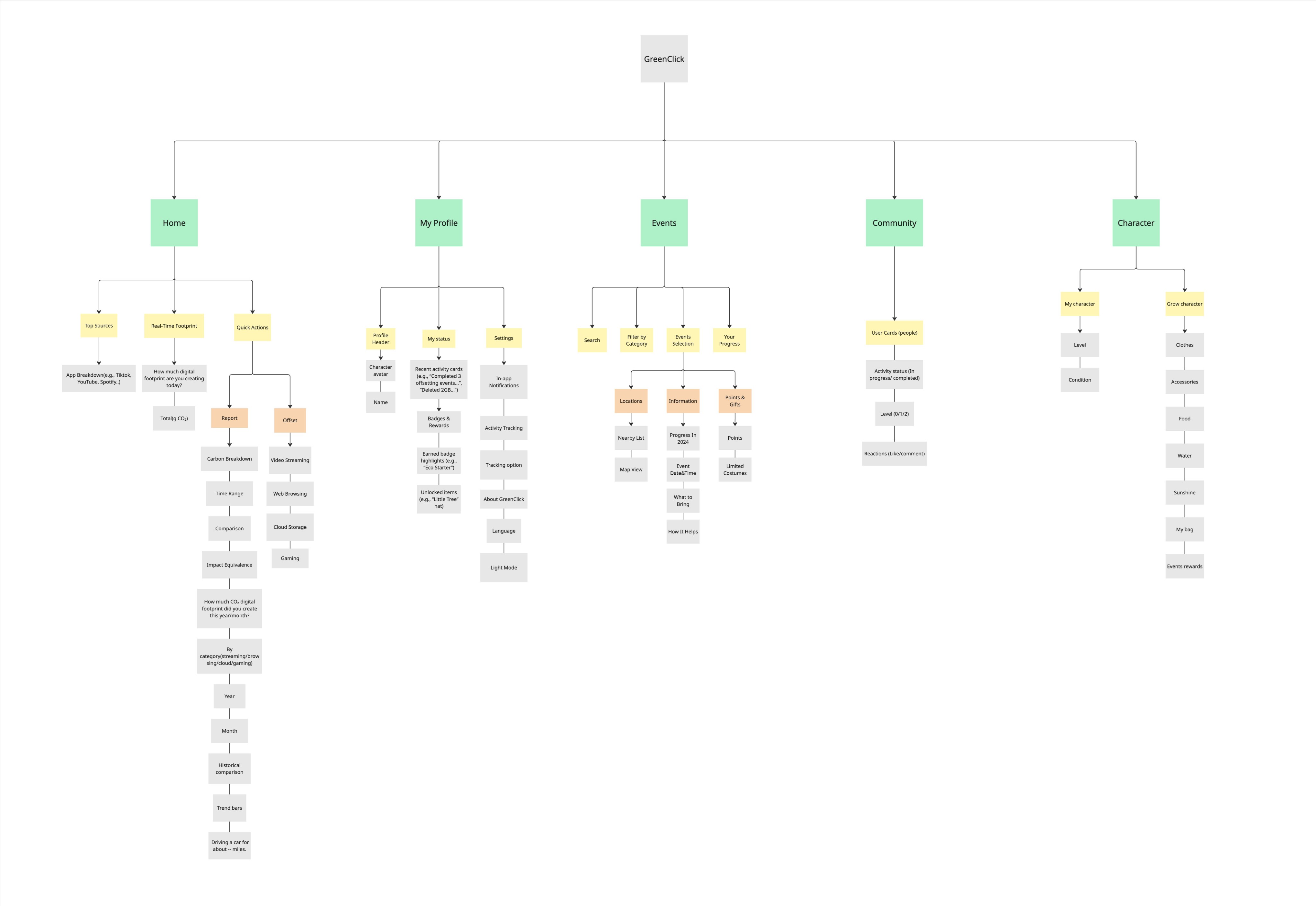
Information Architecture
First, I created an affinity mapping to group related features into pages and better understand how the app’s core content should be organized.

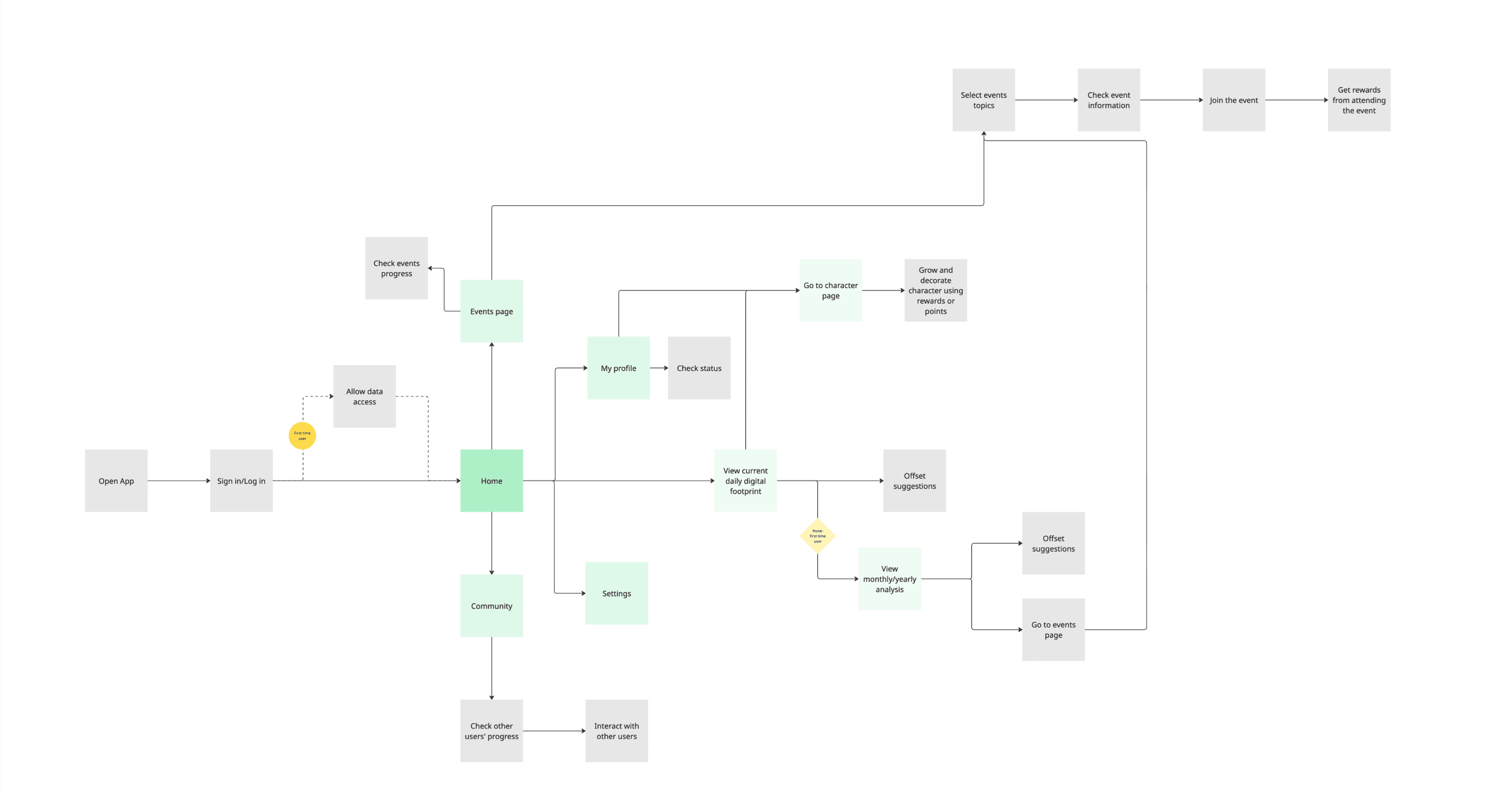
User Flow

Design Iteration
The design evolved significantly from early concepts focused purely on awareness to a behavior-driven system with a complete feedback loop.
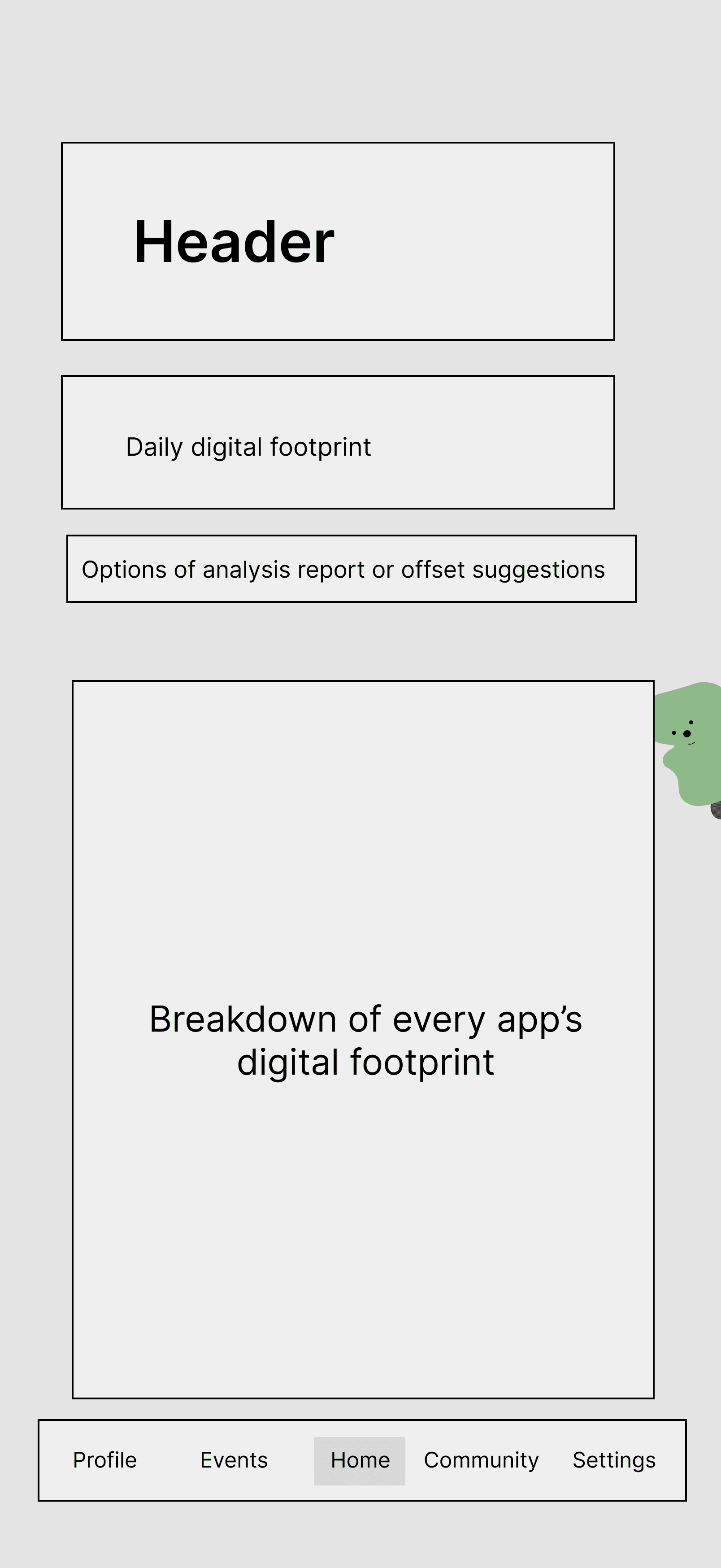
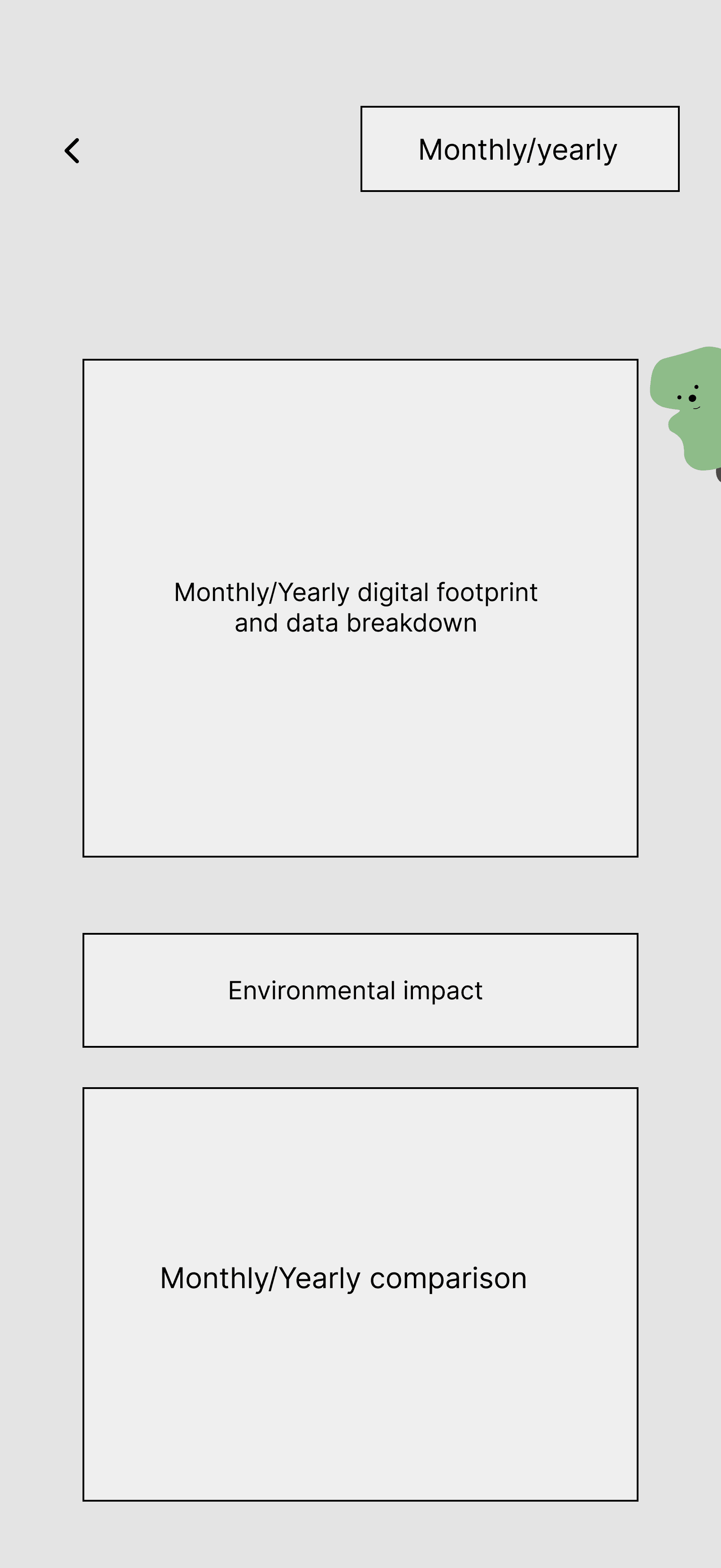
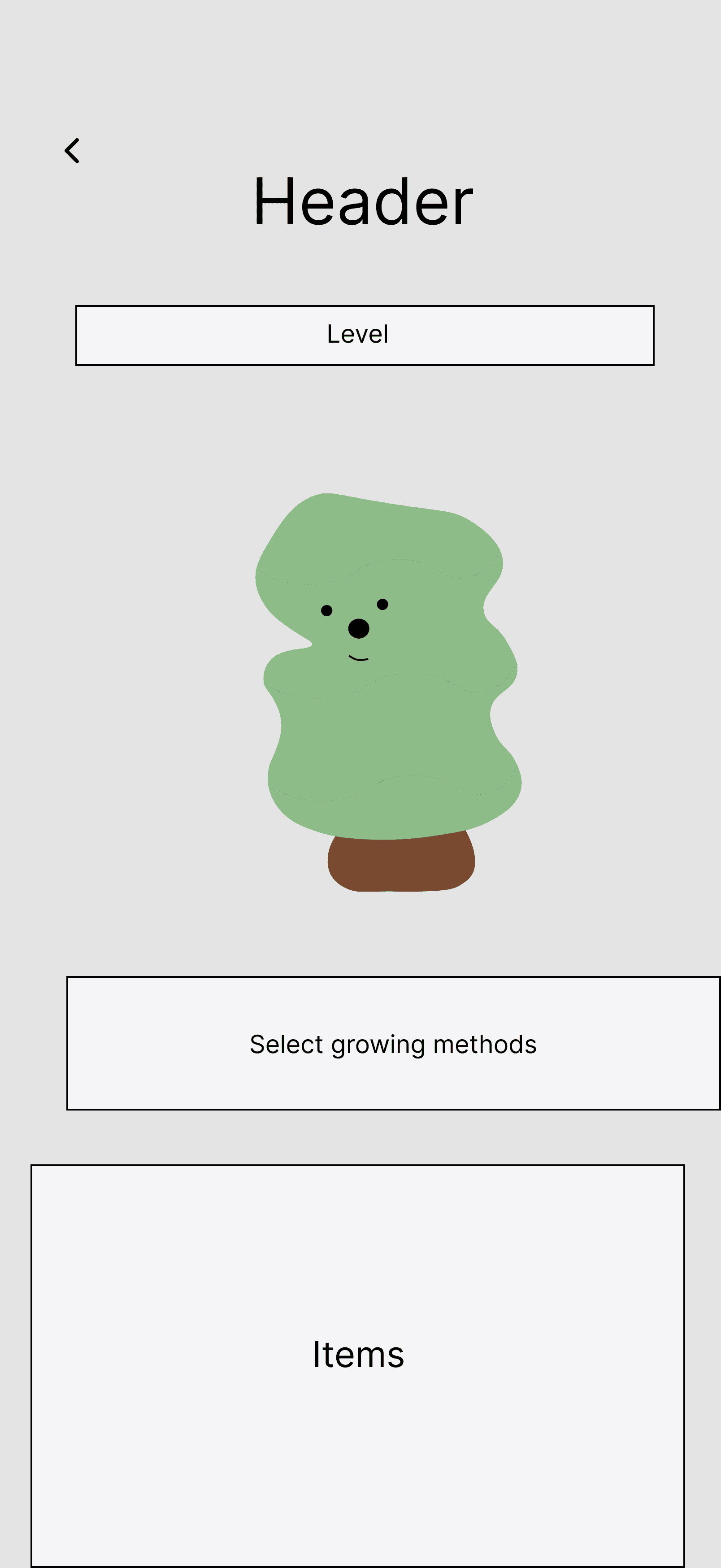
Low Fidelity Wireframes


Digital Footprint Report Page

Character Page
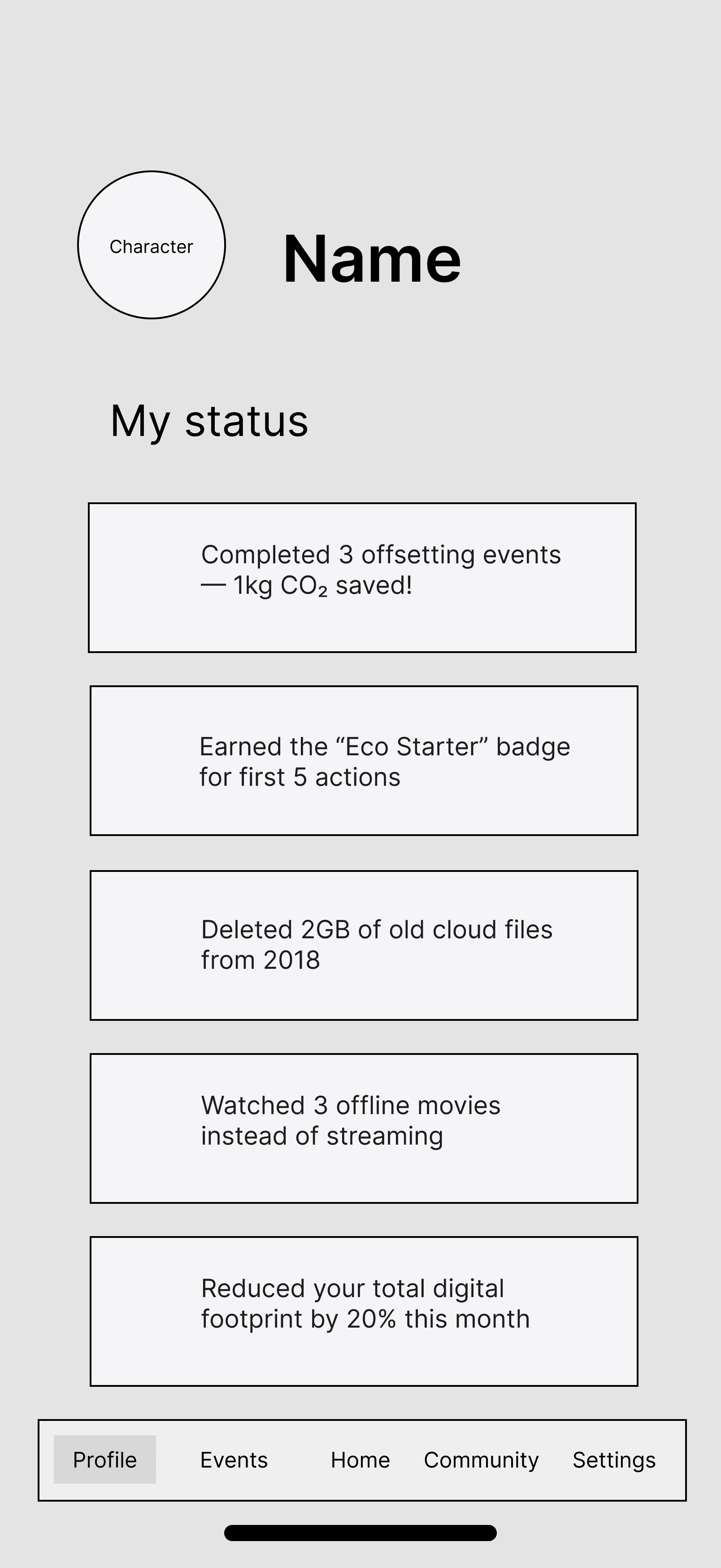
My Profile Page
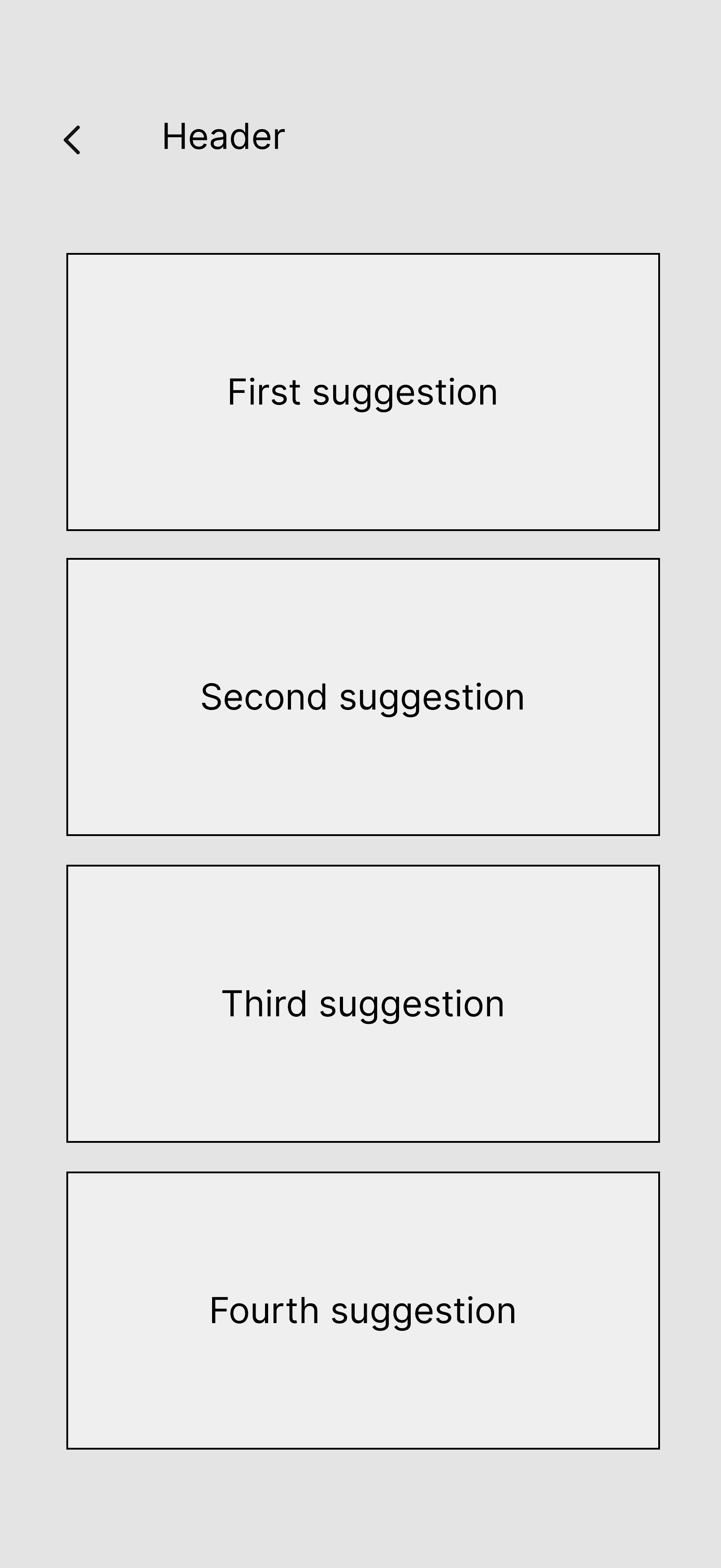
Quick Suggestions Page
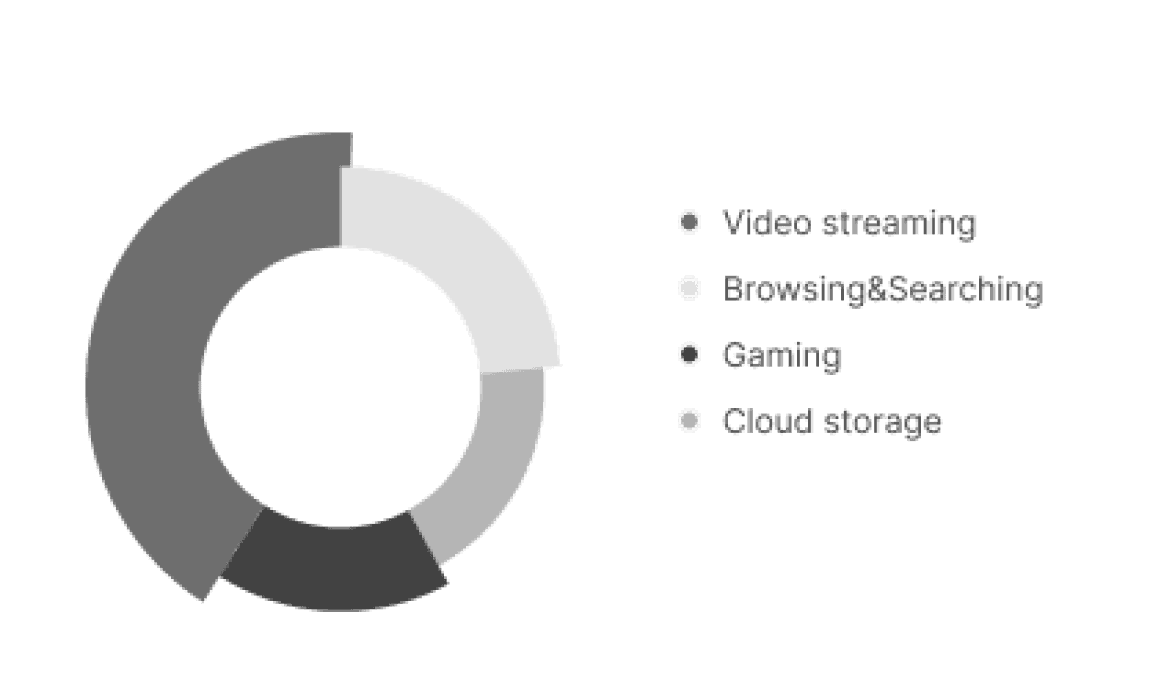
This first round of low-fidelity wireframes helped define the overall structure of the app. From there, I continued refining more detailed low-fidelity elements to develop key features and interactions before the high-fidelity stage.


Footprint Visualization: Made the data display more intuitive and visually engaging.
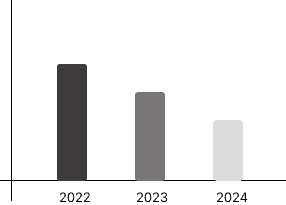

Monthly/Yearly Comparison: Improved clarity for easier long-term comparison.


Reward Selection: Shifted to a more visual layout for quicker interaction.
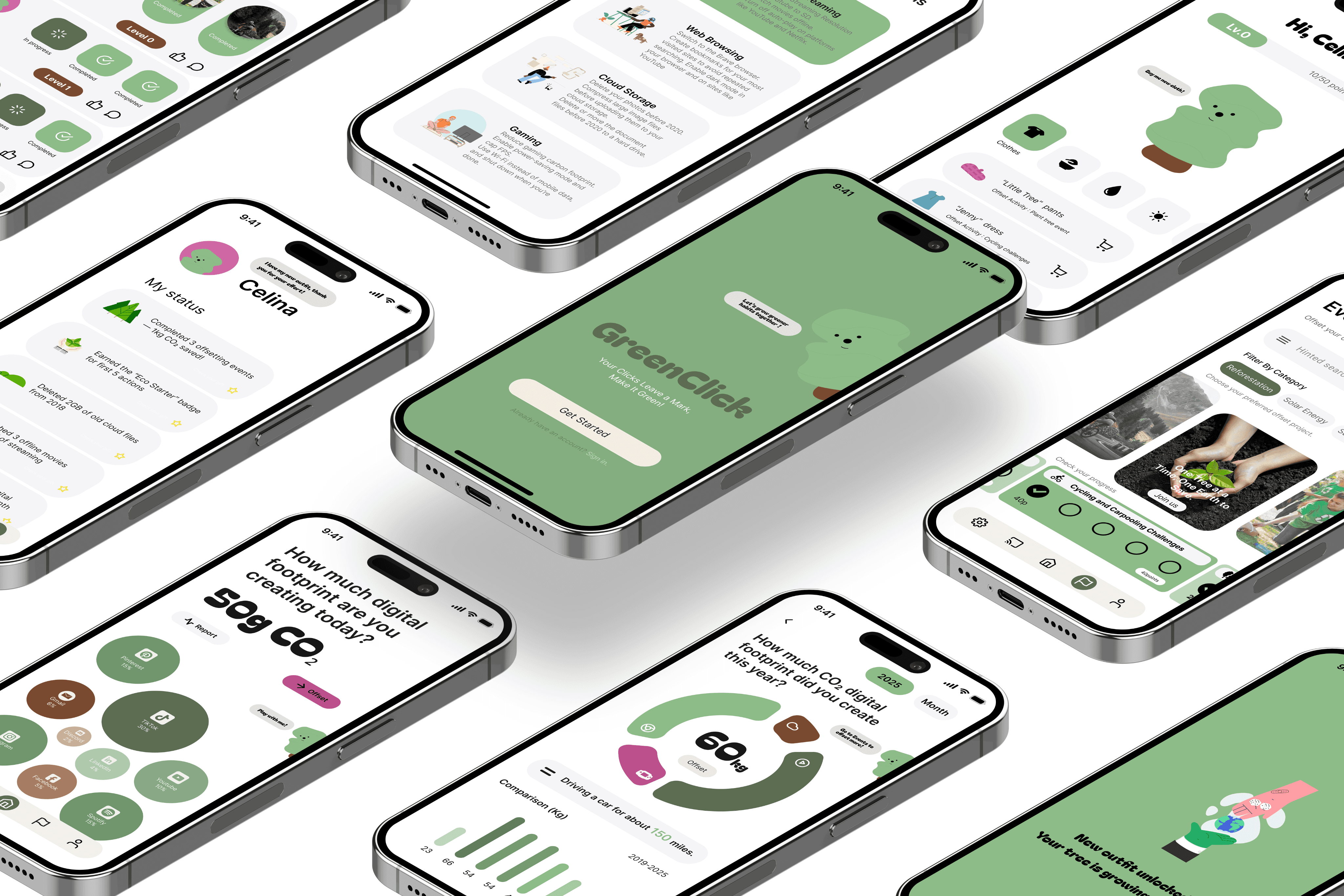
Final Solution
Every feature directly addresses specific user pain point or behavior barrier.

Onboarding
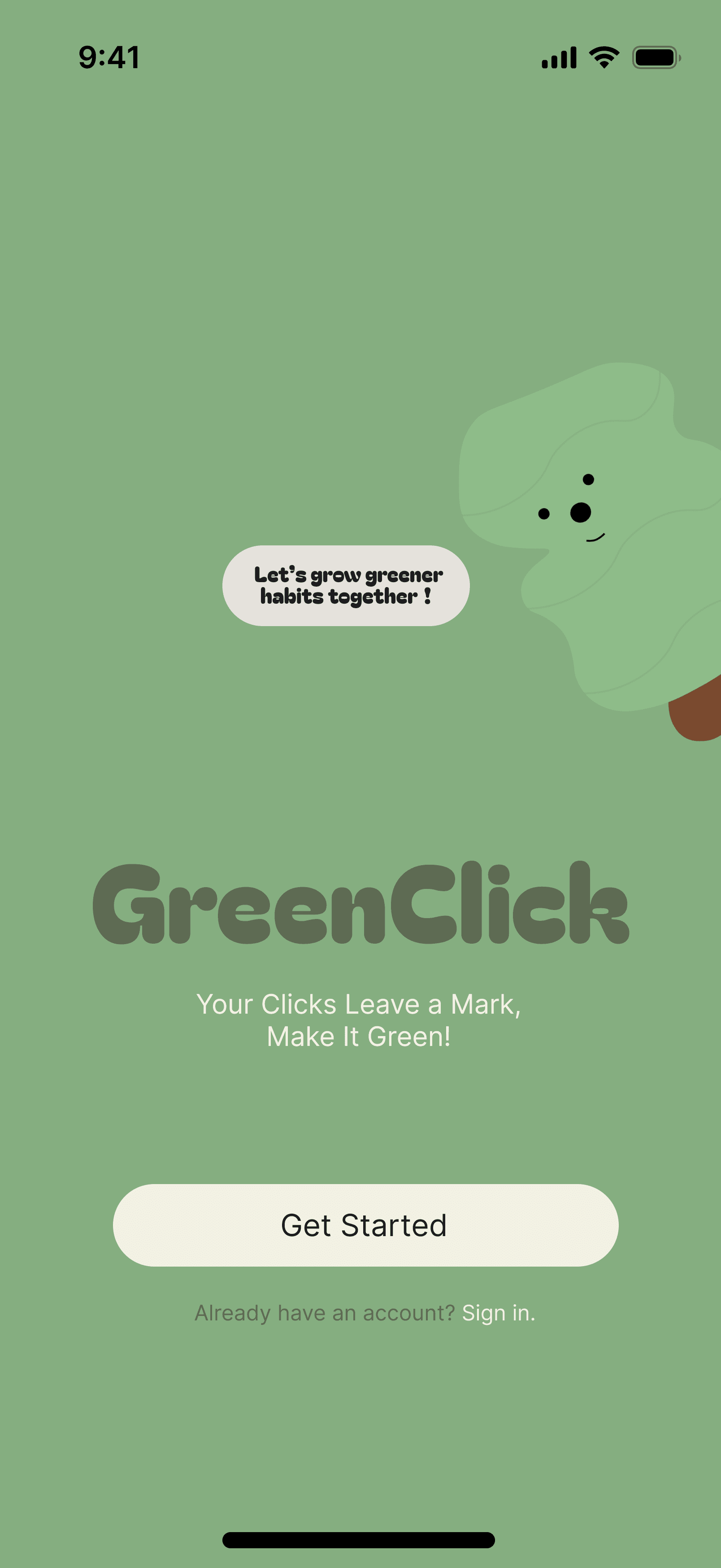
A short onboarding that introduces digital carbon footprint and the main character.
Address:
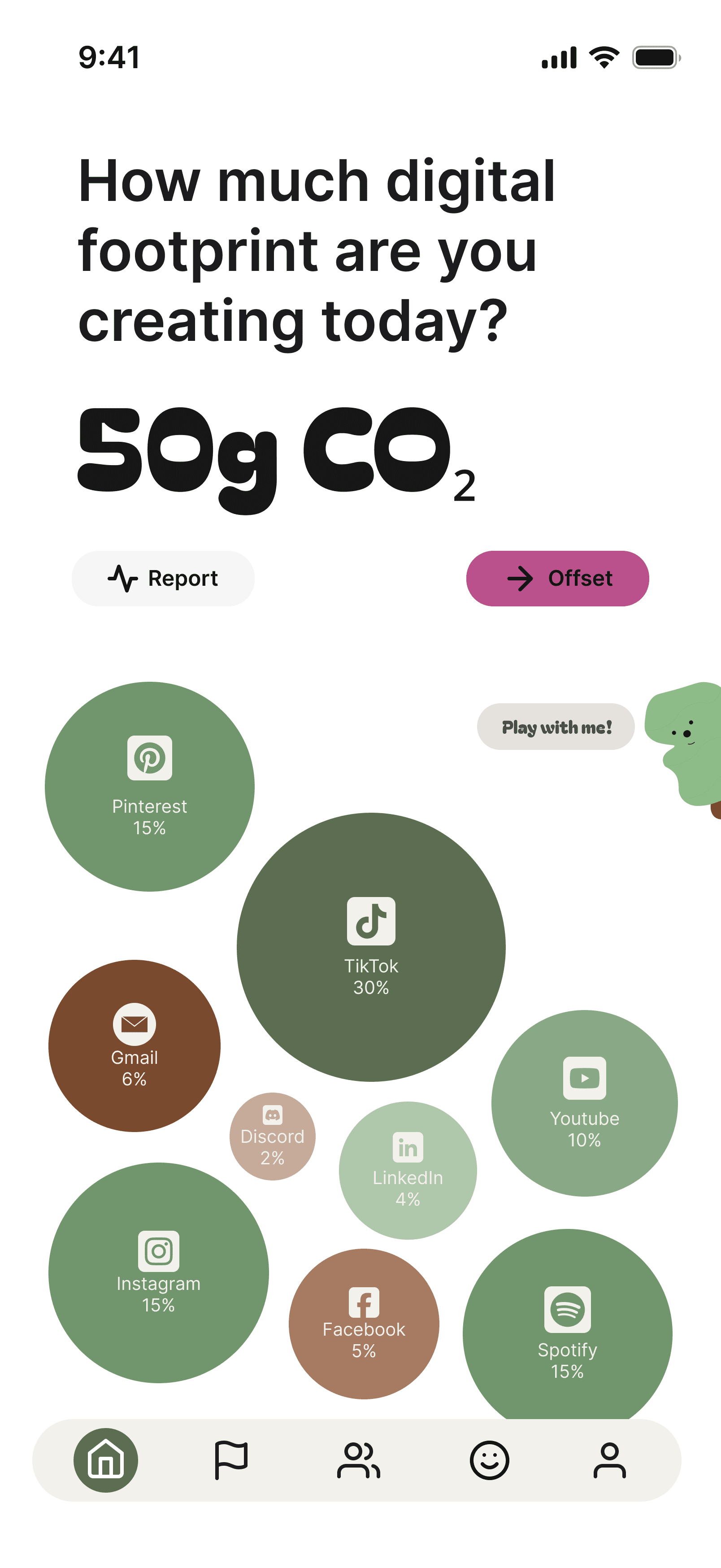
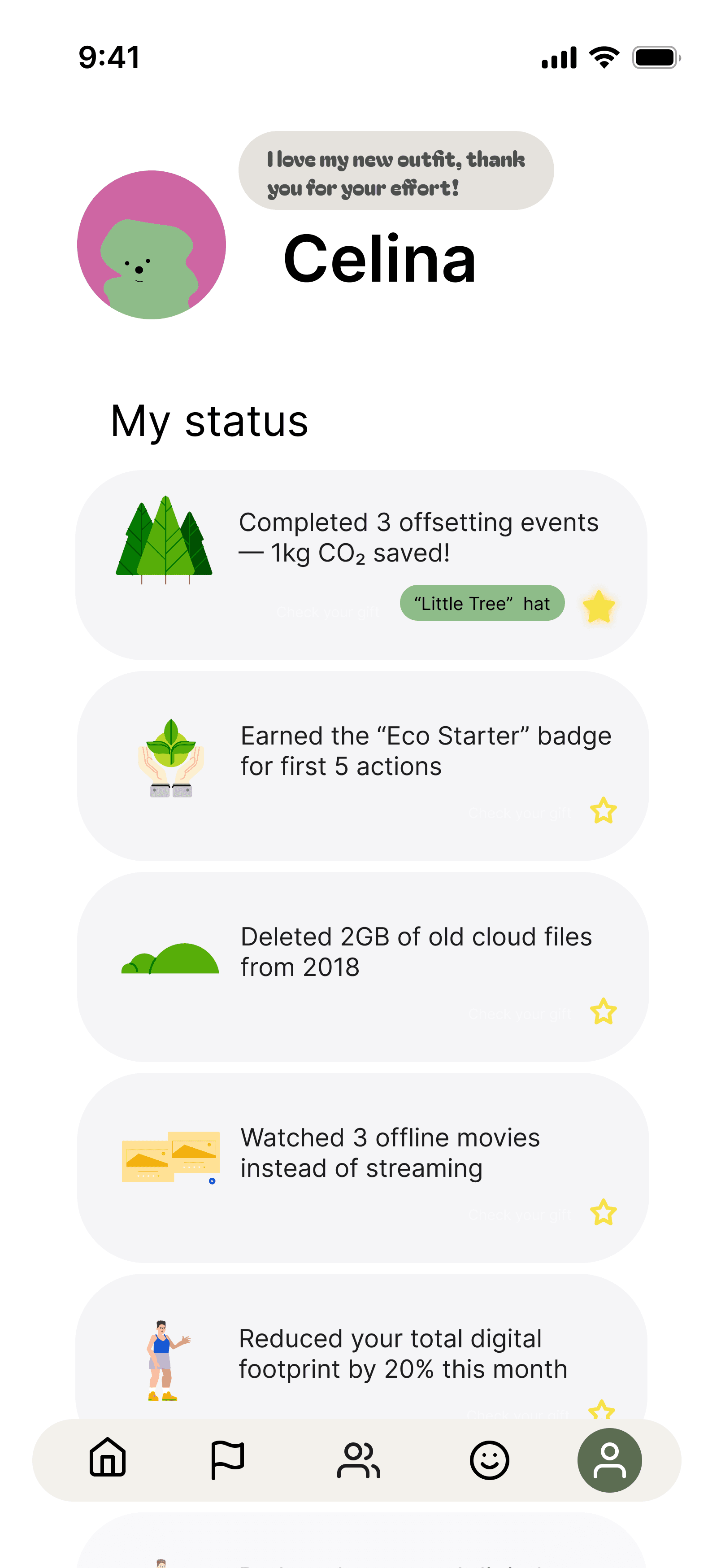
A dashboard that visualizes real-time digital carbon by estimating emissions from system-level app usage data (with user permission), tracking time spent across apps in the background.
Address:


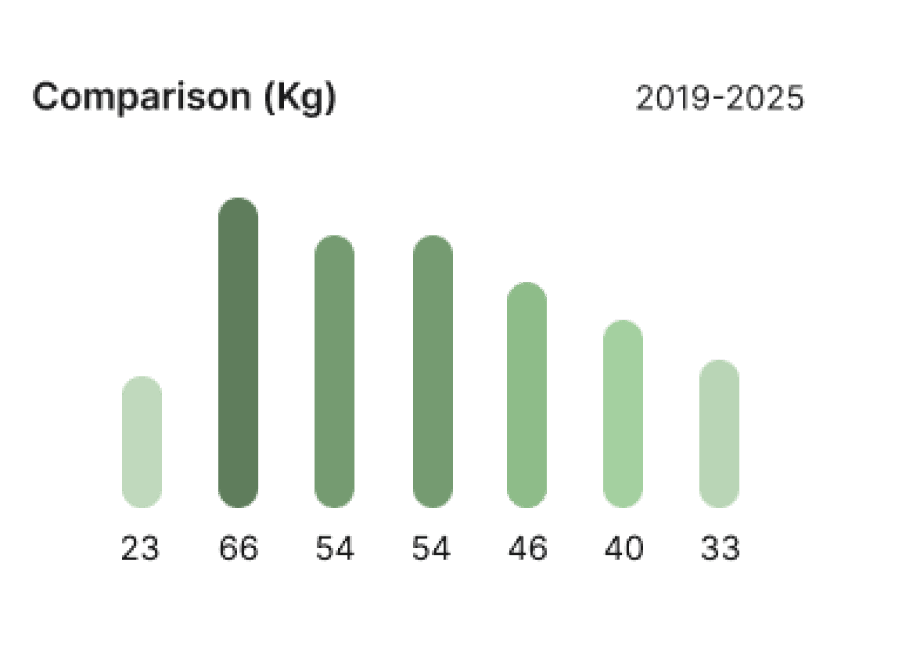
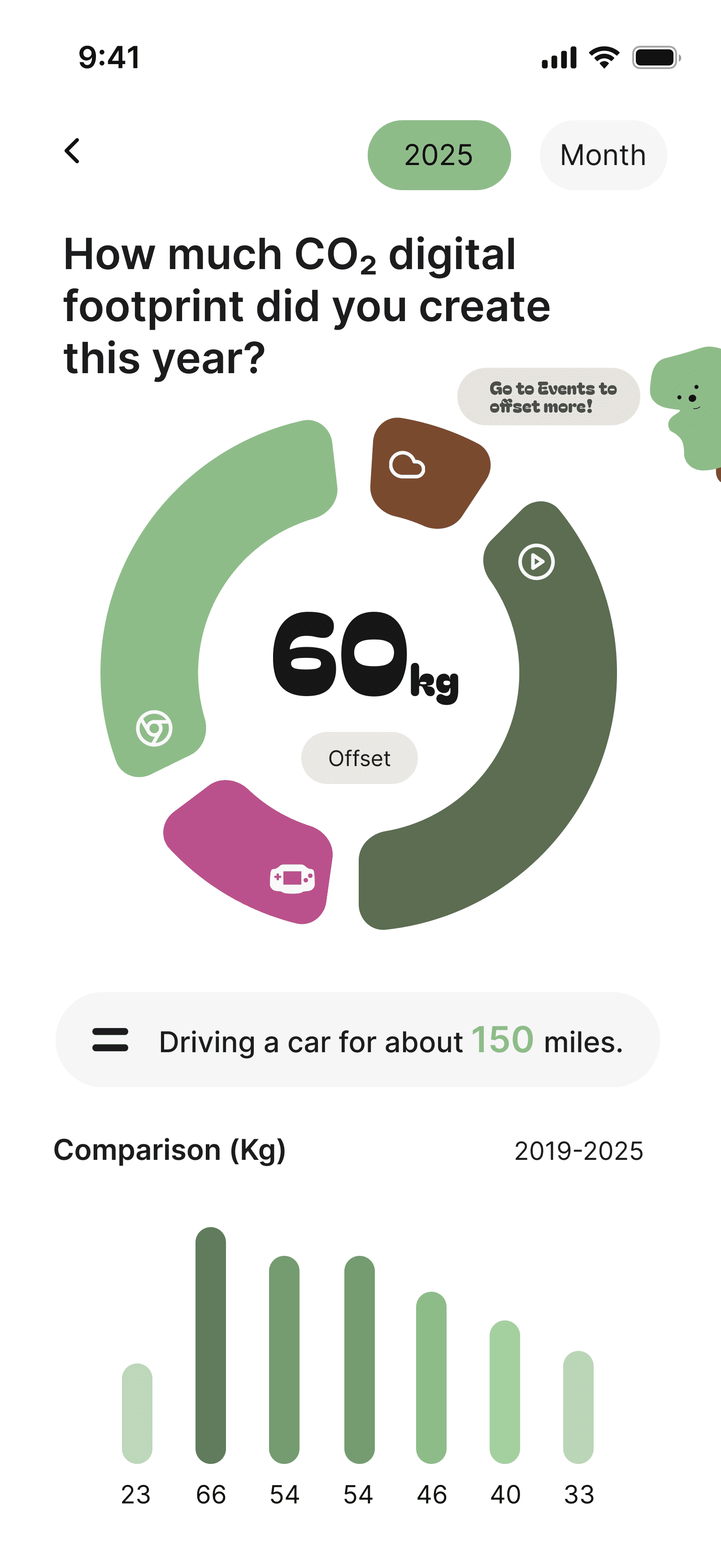
A report page that breaks down digital carbon by category including comparison over time.
Address:
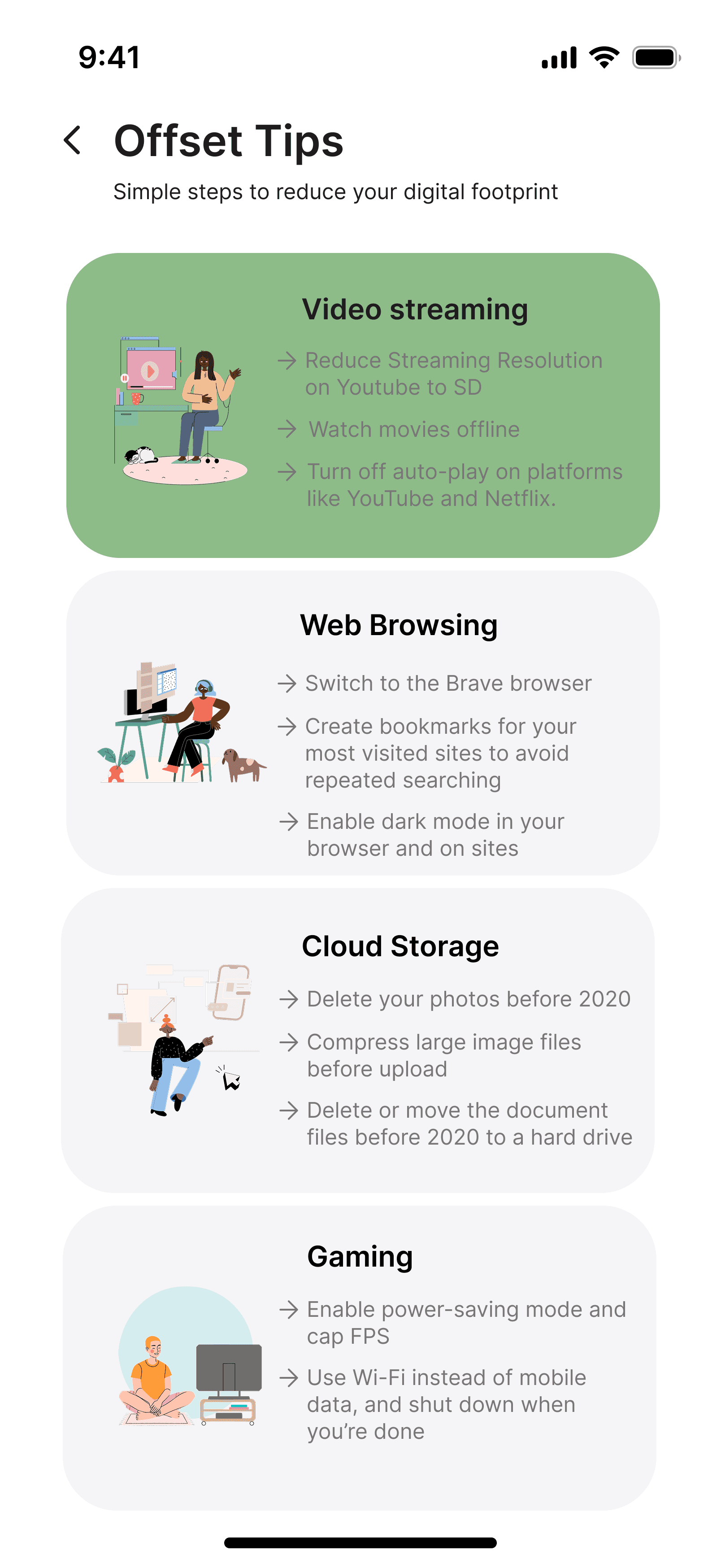
Behavior-specific recommendations regarding to users’ digital footprint analysis.
Address:


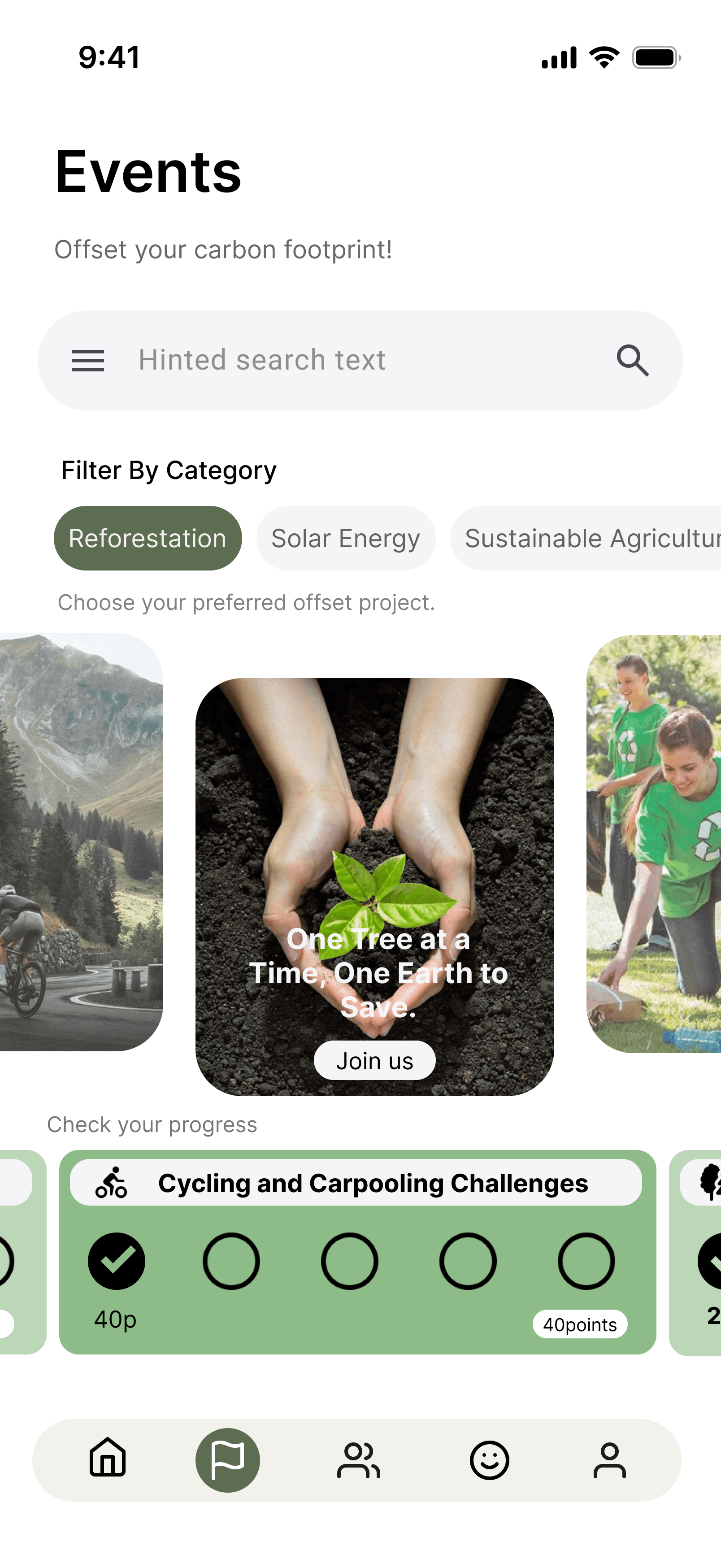
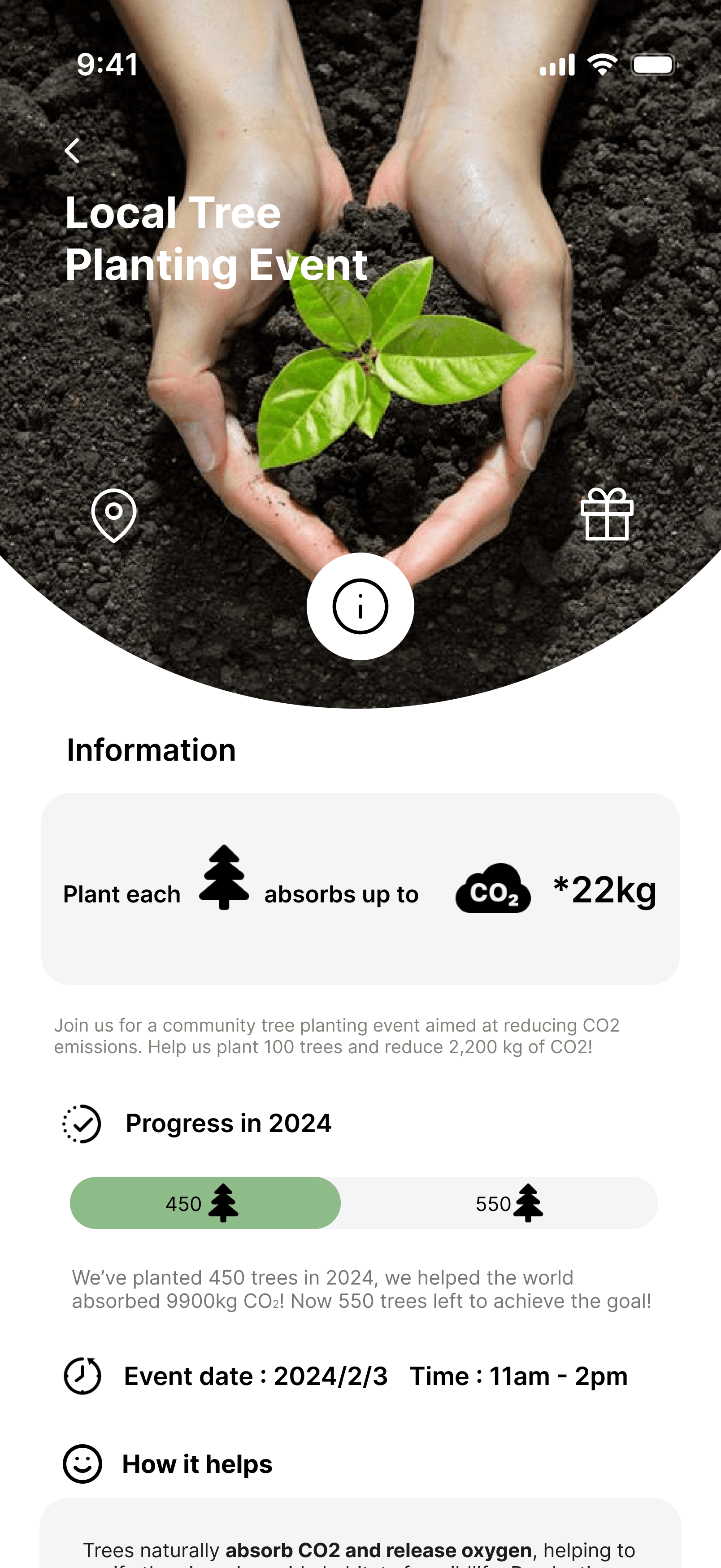
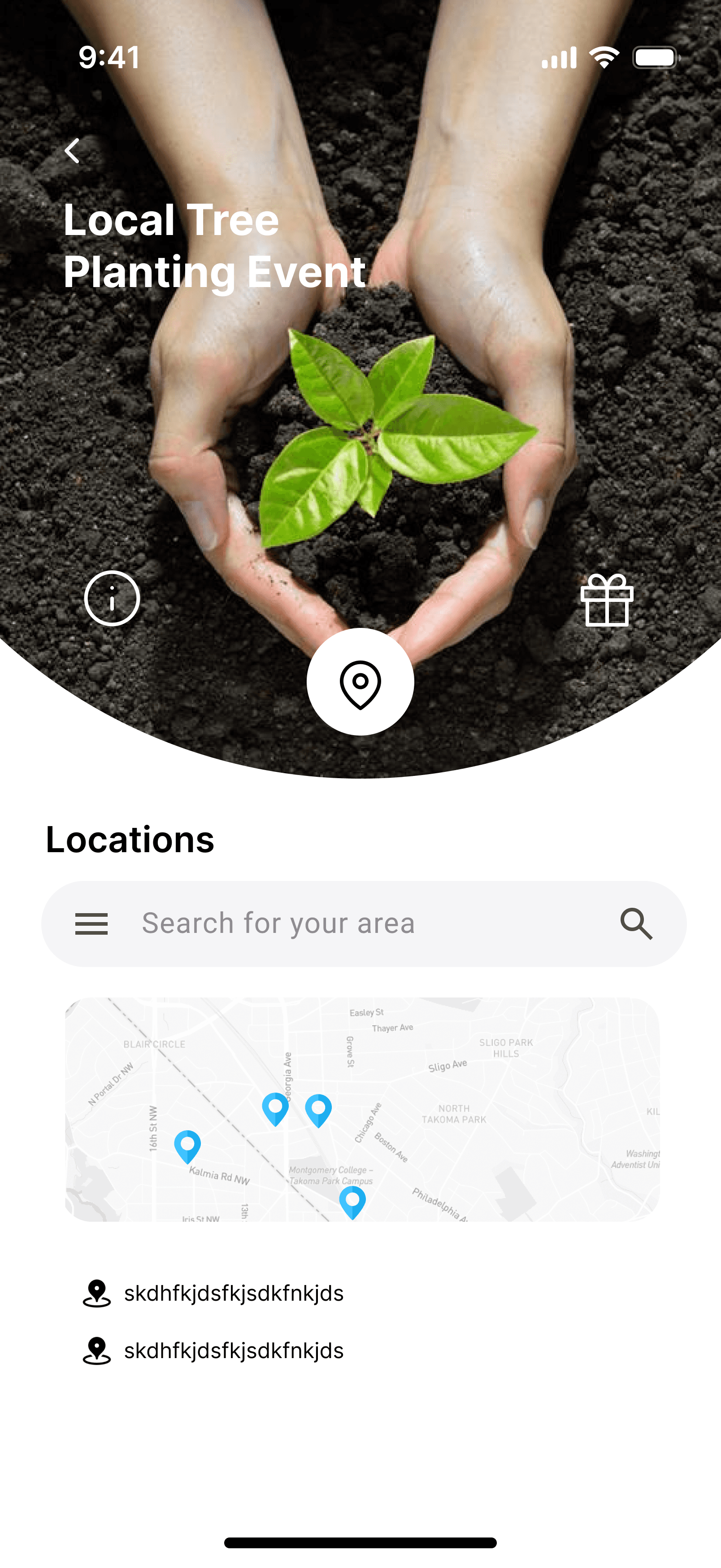
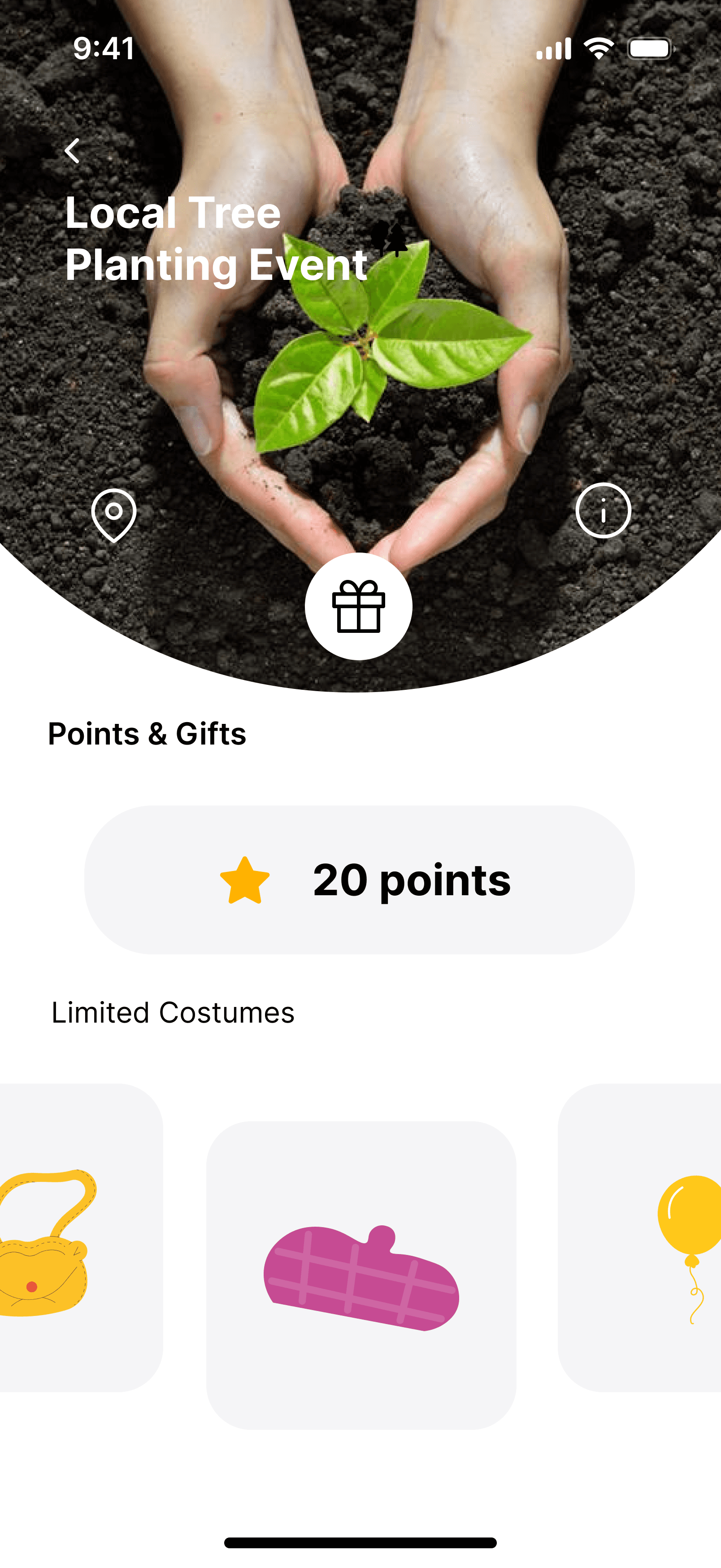
A feature suite for finding offline eco events, understanding impact, and earning rewards.
Includes: browse/filter, event details, map locations, progress, points&rewards
Address:
Extends action beyond the screen


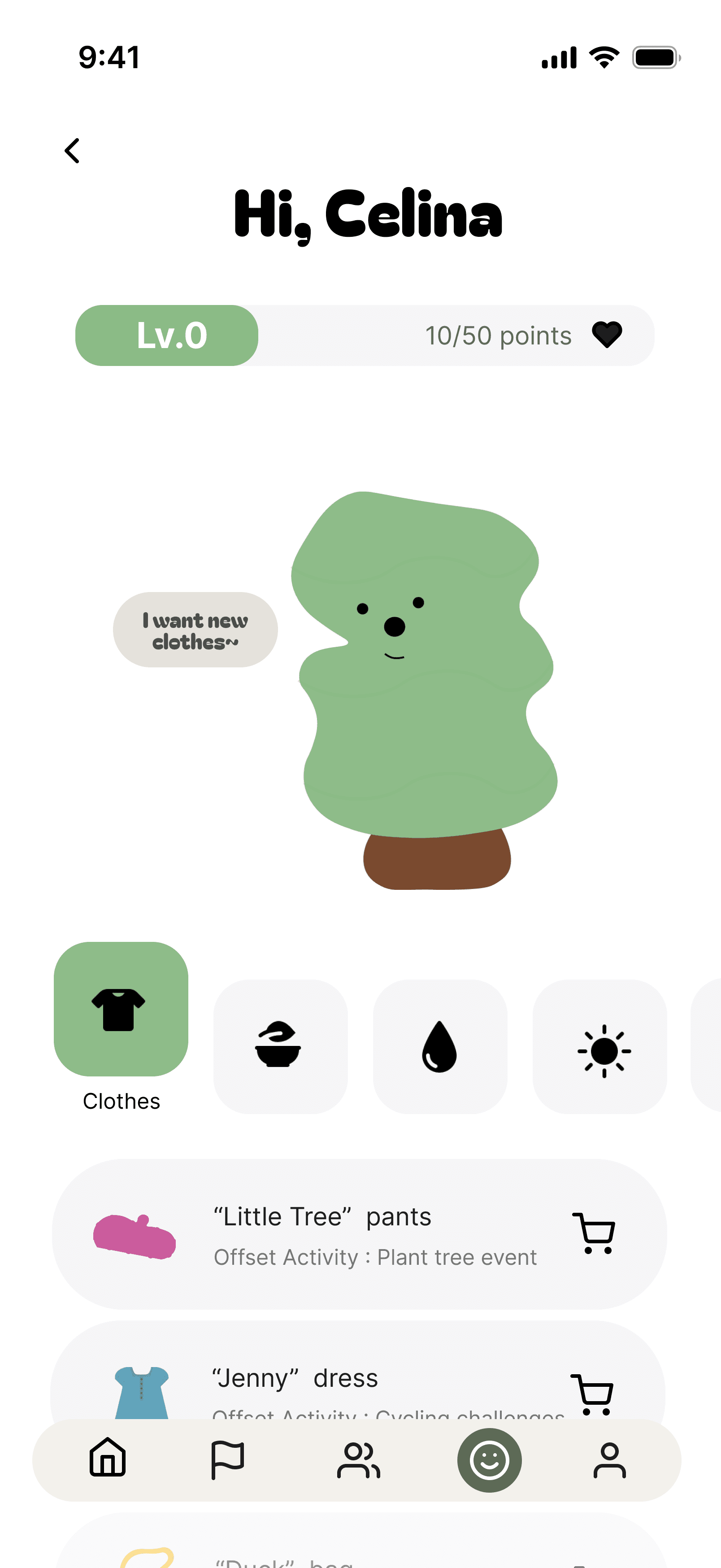
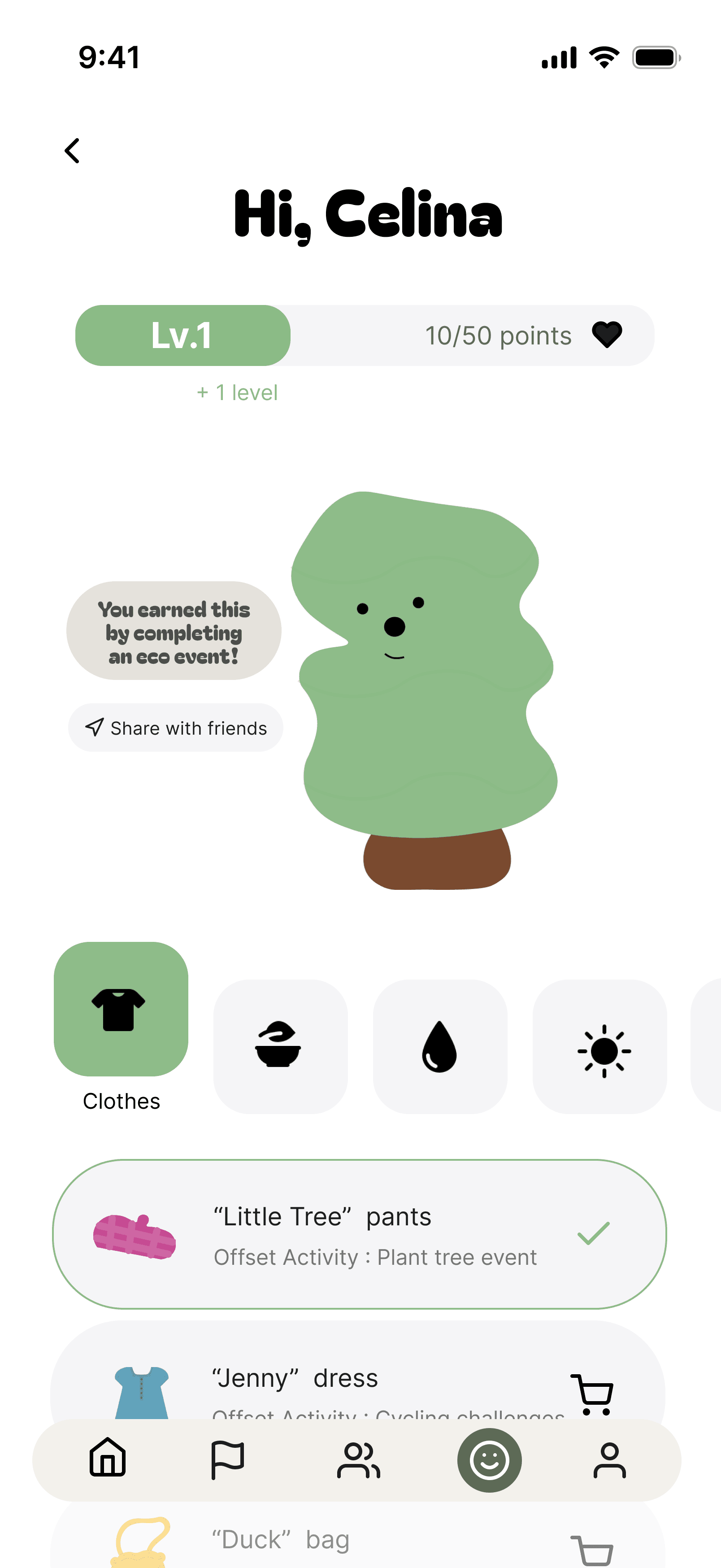
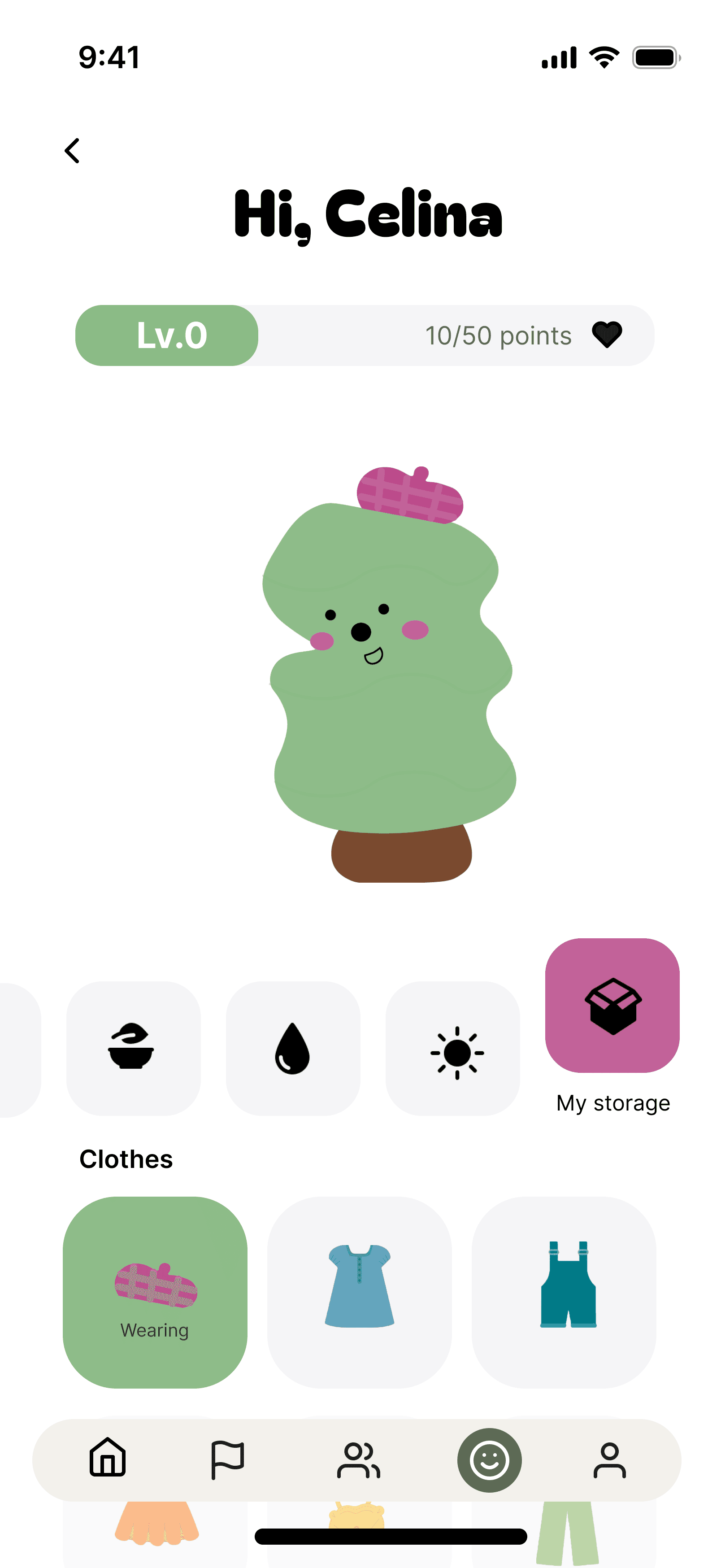
A character-based reward system that visualizes progress and reinforces repeatable actions over time.
Address:
Boosts engagement by making the experience feel playful and approachable


Community
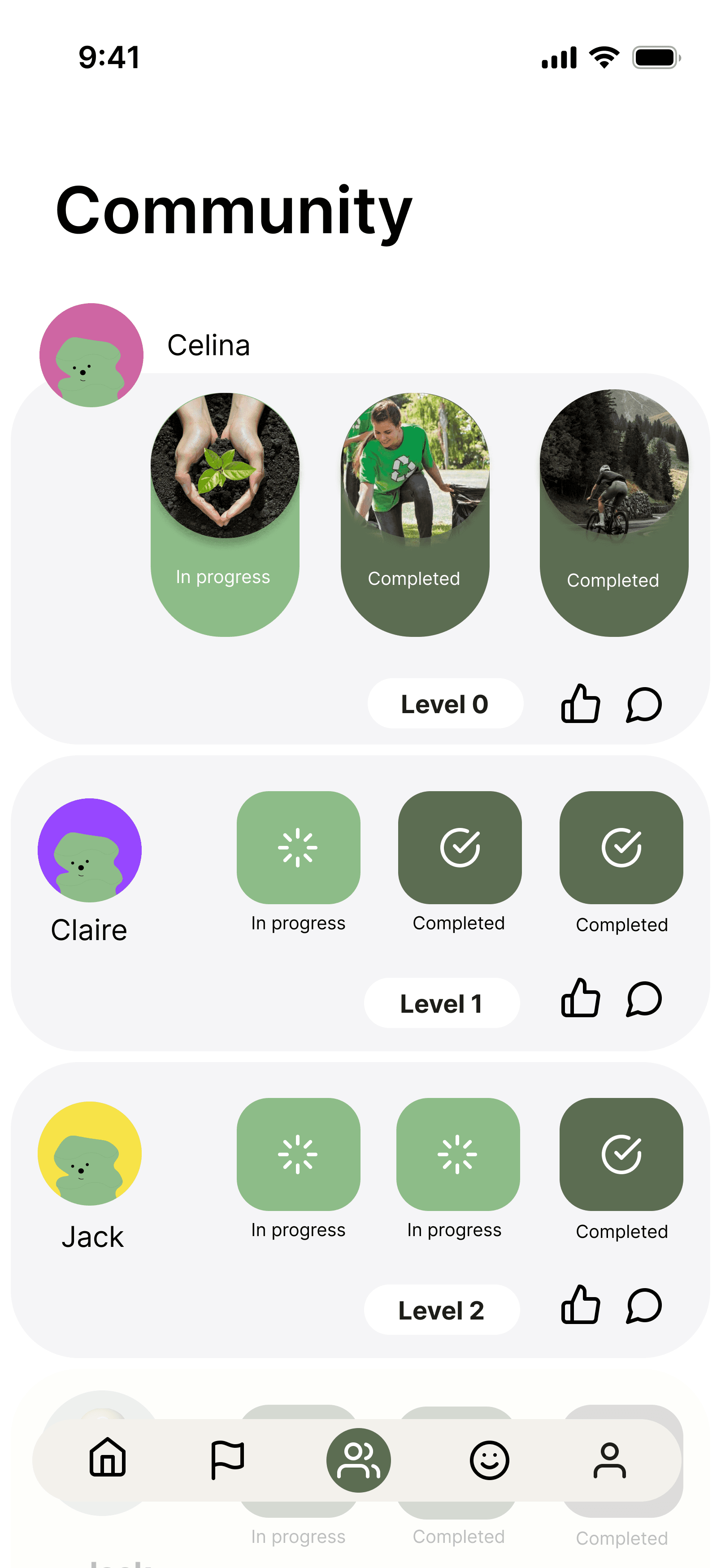
A social space where users can share progress, join shared activities, adn stay motivated together.
Includes: Community feed, leaderboards, shared challenges (join group goals or community missions), reactions&comments, invite friends/connect
Address:
Supports ongoing engagement throgh social reinforcement
Boosts motivation by making effort visible and shareble
Makes sustainablity feel less individual by building a sense of collective impact
My Profile
A personal hub for tracking progress and managing preferences.
Includes: Status overview (footprint, offset progress, points/level), activity history & achievements, account info, and settings (notifications, tracking, privacy)
Address:
Support long-term engagement
Reinforces motivtion through visible achievements and milestones
Helps habit-building by showing consistency over time

Final Solution